


Vanil A Bean · Bourbon Series
Grown. Cured. Whole.
Grand Cru · Papuafrom QAR 186,00★ 5.0 (95)
Vanil A Bean
Bourbon series
Papua, Indonesia
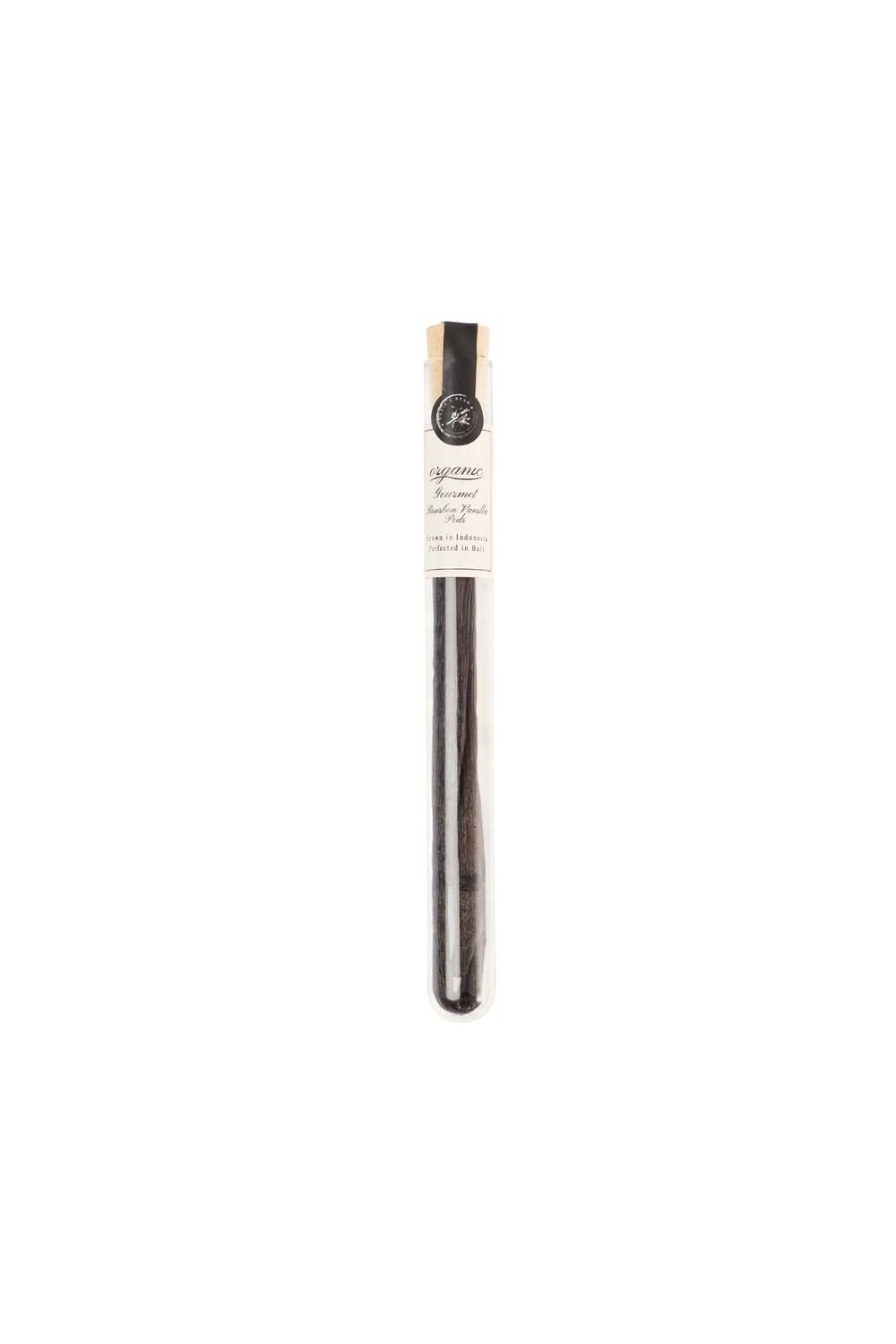
Grand Cru Bourbon Vanilla Beans Grade A Bourbon vanilla beans, 20–23 cm, from Papua, Indonesia
Grade A · 20–23 cm · 12, 24 or 50 beans
In the kitchens of Zuma, Oberoi and Mövenpick
Scroll the journey
01 · Papua, Indonesia
This is the bean you know.
Dark, supple, fragrant. But this is not how its life began.
A year ago, it was green.
No colour. No scent. Just a pod on a vine in Papua, Indonesia.
Its story begins with an orchid.
Vanilla is the fruit of a climbing orchid. Every bean begins as one of its flowers.
The flower opens for a single morning.
By afternoon it has closed. Before it does, our growers pollinate it by hand.
All the while, the vine climbs.
Clinging to the bark of its host tree, it reaches for the light.
Its roots stay close to the surface.
There they feed on the leaves that fall from the tree above.
Below lies volcanic ground.
Ash, worn down over centuries into a dark, crumbly earth.
Rich, and never waterlogged.
The soil holds water without staying wet, and carries the minerals a slow-growing vine depends on.
02 · On the vine
Then, nine months.
The pod reaches its full length within weeks. It spends the rest of that time filling: with seeds, and with the compound the cure will one day turn into vanillin.
The tip turns yellow.
The pod is ripe. It is picked by hand, still green and barely scented. The vanilla has not yet arrived.
03 · The Bourbon cure
Now comes the slow part.
Ten to twelve weeks, none of it rushed. This is where the flavour is made.
First, a night in teak.
A brief bath of hot water wakes the pod. Then it sweats overnight in teakwood barrels, a step that is our own.
Then, sun and shade.
Out into the sun, back into the shade, day after day, until the pod is supple, glossy and deep brown.
At last, it rests.
Once its aroma has settled, every bean is graded by hand, and every batch is numbered back to its farm.
04 · Reading the bean
Few people ever look this closely.
Here is what matters.
In the kitchens of Zuma, Oberoi and Mövenpick
01 Length
20–23 cm
Tip to tip, about 6 g.
A longer bean holds more seeds, and more to work with.
02 Stem
Picked by hand.
Look at the tip. That curve marks where the bean held to the vine:
the signature of Vanilla planifolia, perfectly cured.
03 Surface
Whole. Dark. Supple.
Not a split, not a scar.
Every bean is inspected by hand before it is sealed.
04 Frost
Look for the crystals.
Fine vanillin crystals can rise to the surface.
They are not mould. They are part of the bean.
05 Flexibility
Supple, never brittle.
This batch measures 30–35% moisture in the laboratory:
enough to bend without breaking.
06 Aroma
Held in the sheen.
The bean’s natural sheen carries its aroma.
This batch measures 2.2–3.5% vanillin in the laboratory.
Papua batch · laboratory tested
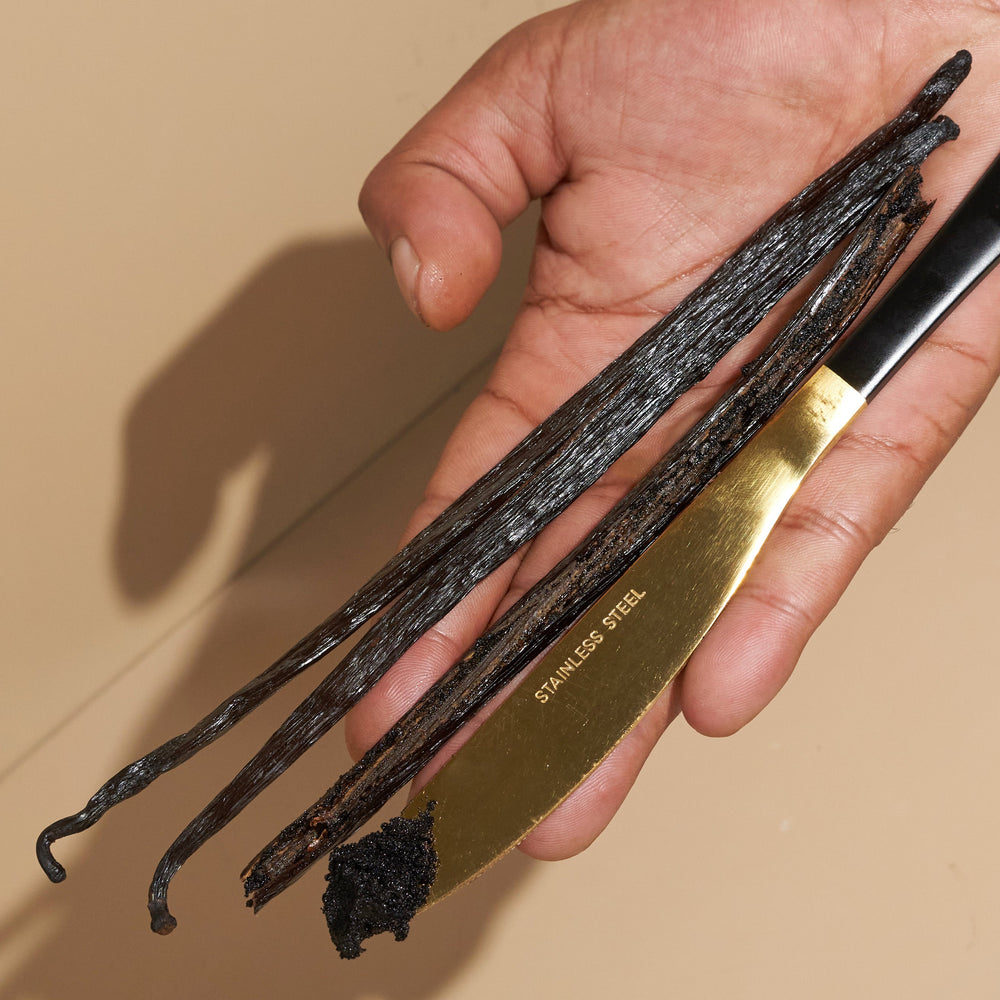
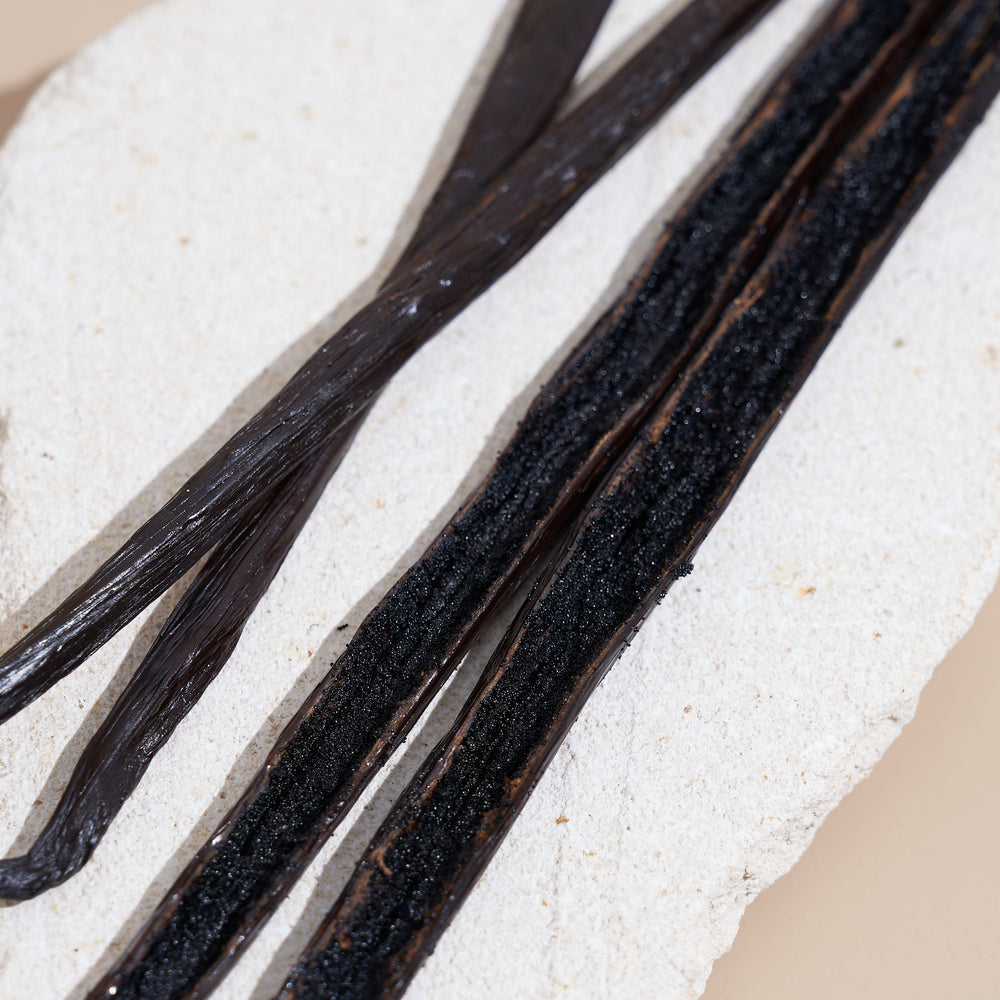
Now, look inside.
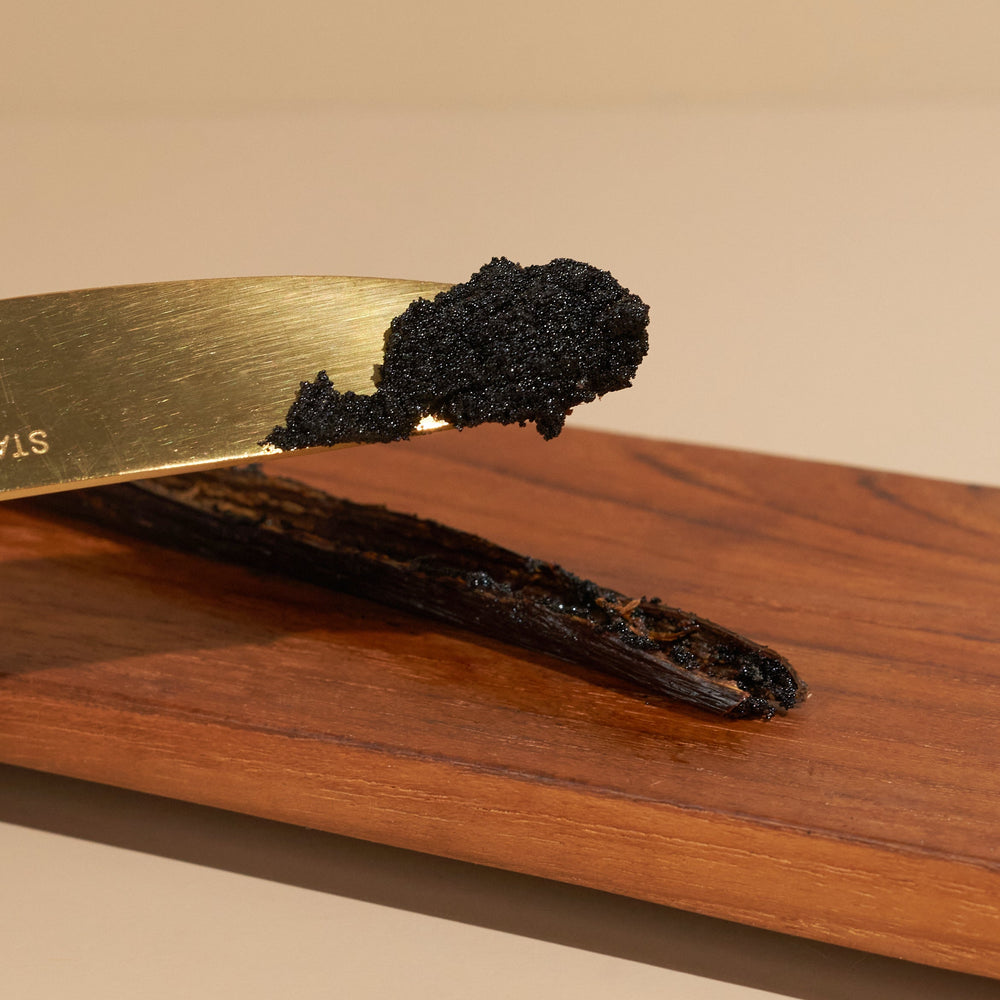
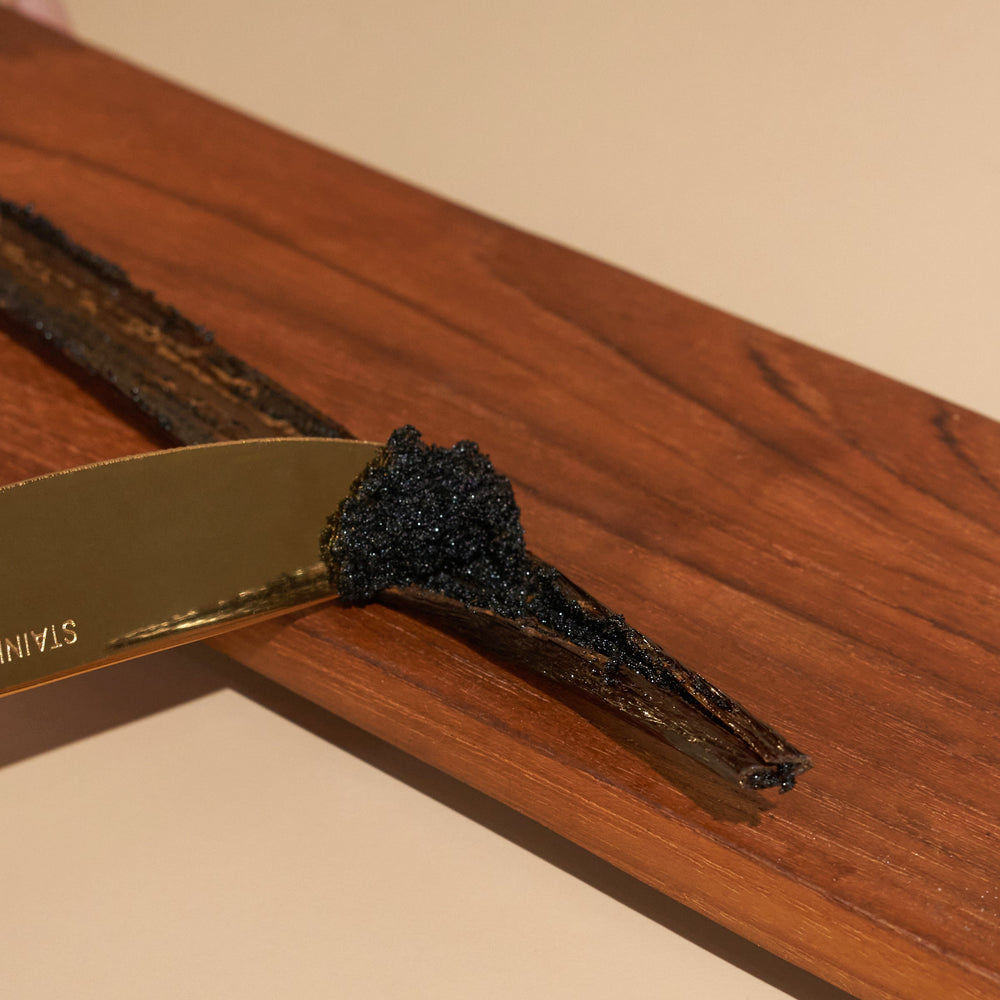
Thousands of seeds in a dark, oily pulp. This is what you scrape into the pan.
05 · The flavour
The note everyone knows.
Vanillin: 2.2 to 3.5% of every bean, measured batch by batch.
But it is not alone.
Hundreds of other aroma compounds stand behind it. These are the ones you will taste.
01 Tasting note
Cacao
Deep chocolate warmth. Rich and rounded.
02 Tasting note
Fig
Dried-fruit depth. Soft. Gently jammy.
03 Tasting note
Stone fruit
Ripe sweetness. A rounded finish.
04 Tasting note
Caramel
Warm. Dark. Lingering.
The finish
A whisper of tobacco. Long, creamy, unmistakably vanilla.
Choose a note to find it in the seeds
One bean, one batch.
Enough for about 500 ml of custard or cream. Split it, scrape it, and keep the pod.
In professional kitchens
Grand Cru is the vanilla we supply to kitchens such as Zuma, Oberoi and Mövenpick.
ZumaHiltonMövenpickOberoi Hotels & ResortsThomas HaasRoom4DessertAlchemy
Seen in
Dine MagazineResident Magazine
In the studio
08 · Continuity
Never run out.
Tell us how you cook and we will work out how many beans you need, and how often they should arrive. Change, pause or cancel whenever you like.
01 How do you cook with vanilla?
02 How much vanilla does your kitchen use?
Tell us what you make. We’ll work out what you need.
- Butter, yoghurt or creamHalf a bean for a batch of vanilla butter or yoghurt0
- Pancakes, cakes and bakesOne bean for a cake or a batch of pancakes0
- Custard or ice creamOne bean for about 500 ml0
03 Your rhythm
About 0 g a month.
20% off every delivery · Free worldwide delivery · Pause, change or cancel whenever you like · 10% of every subscription goes back to our farmers
From our farms to your kitchen, fresh every time. Express delivery with DHL · arrives in 3–5 days
Cooking for more? Talk to us
5.0out of 5
95 verified reviews
After their long trip to me, these wonderful beans are now extracting. Amazing smell…
My second order and happy to say it’s as excellent as the first batch.
Quality product — 2nd time purchasing — will buy again.
From our farms
See it for yourself.
Everything above was drawn. This is the real thing: our growers, our curing yards and the hands that sort every pod.
09 · Measured
The numbers behind the flavour.
Natural vanillin, moisture, cure and shelf life for these beans, with their safety results beneath.
- Species
- Vanilla planifolia
- Origin
- Indonesia
- Appearance
- Moist and plump. No splits or scars
- Length
- 20–23 cm
- Colour
- Dark brown
- Flavour additives
- None
- Allergens
- None declared
- GMO
- GMO free
- Process
- Hand-pollinated · Bourbon cured · sorted by hand
See the microbiology.
- Plate count
- ≤ 10³ cfu/g
- Yeasts
- ≤ 10² cfu/g
- Moulds
- ≤ 10² cfu/g
- Coliforms
- Not detected
- E. coli
- Not detected
- Salmonella
- Absent in 25 g
Side by side
Weigh the seeds, not the bean.
One of our beans beside a Bourbon bean from the supermarket, both split and scraped onto paper. Ours came away as seed. The other came away in liquid.

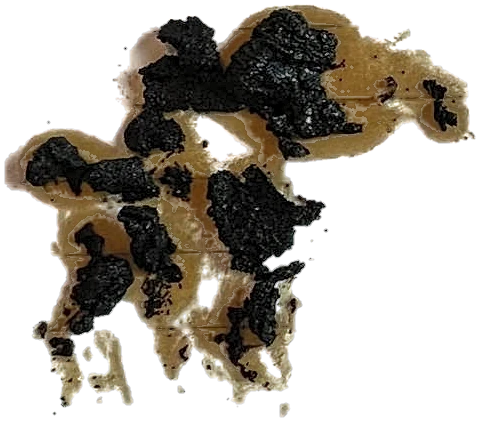

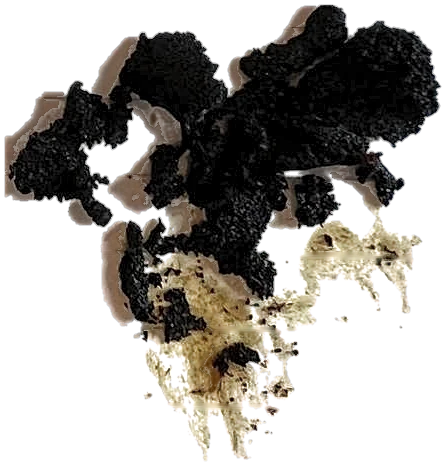
One bean of each, weighed on a 0.01 g scale in November 2026. Shown at their true relative size.
In their words
Chefs who cut them open.
Vanil A Bean · Bourbon Series
Whole, as it left the farm.
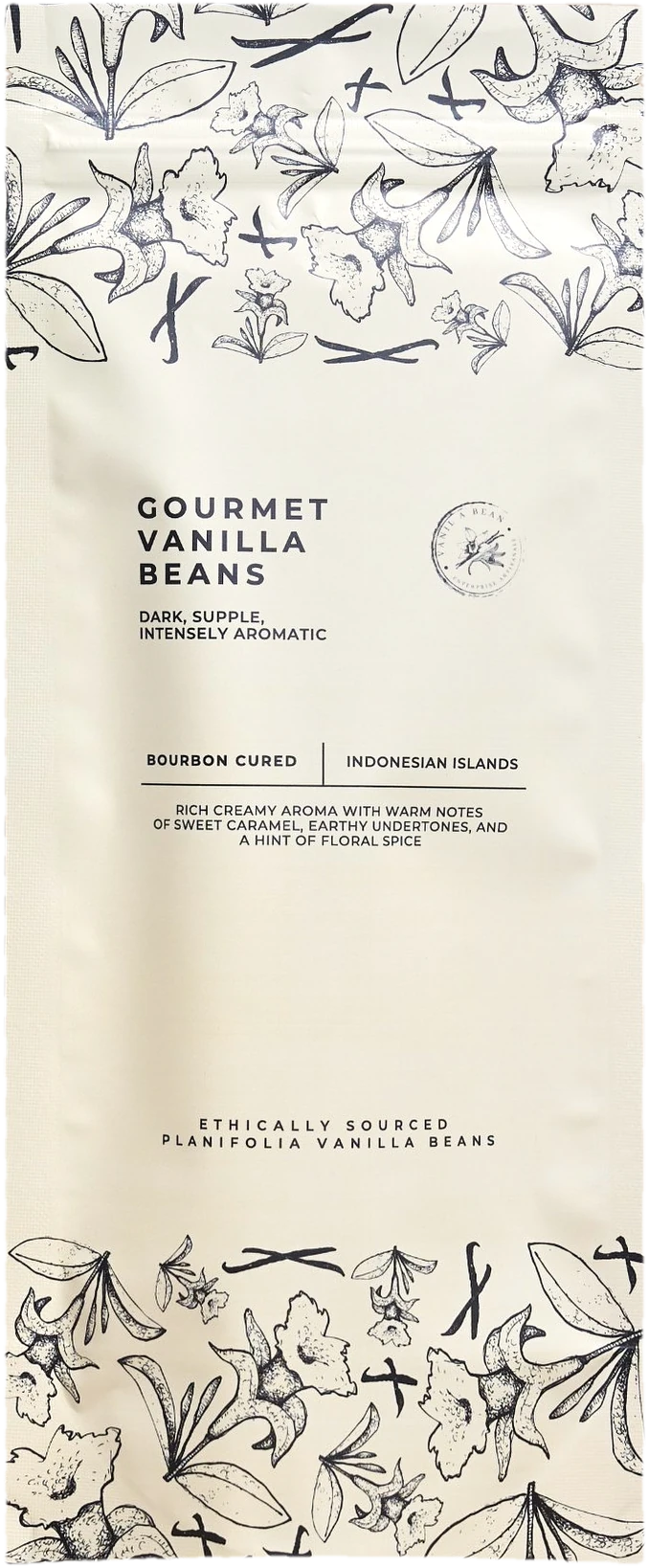
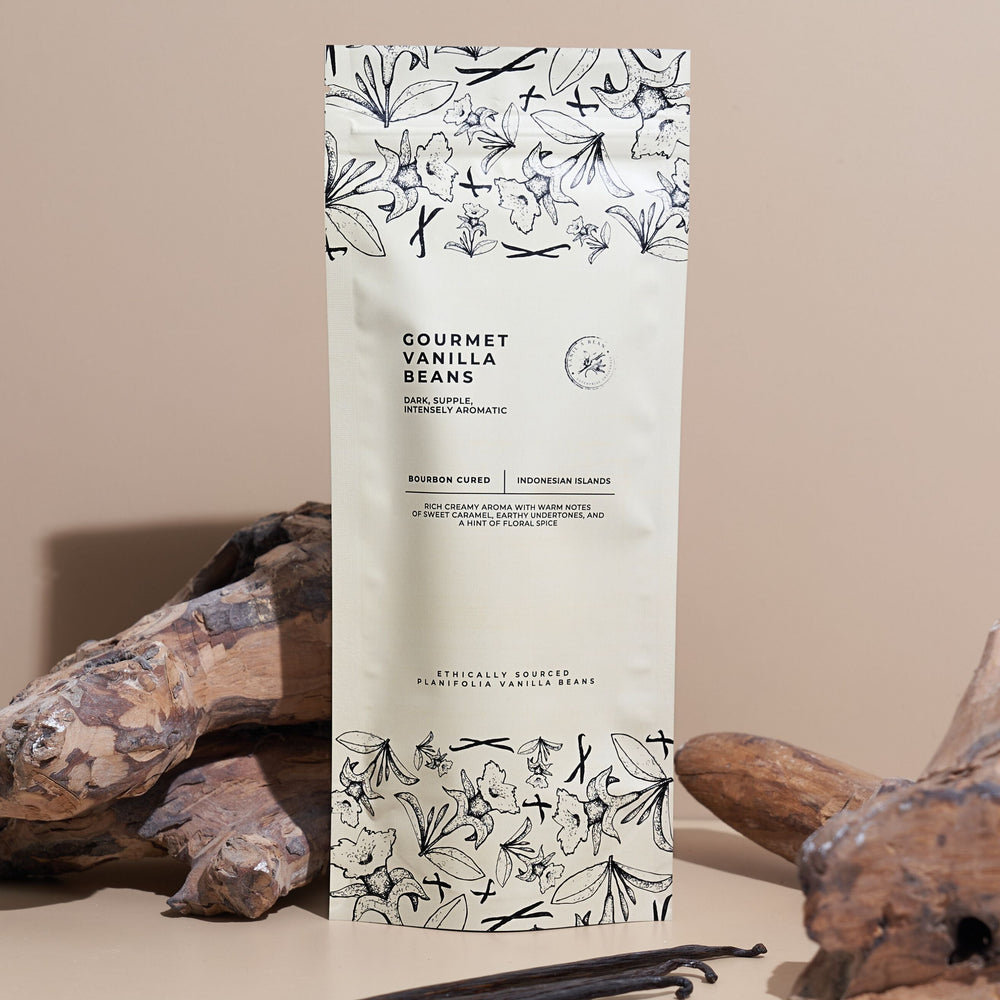
Vacuum-sealed, in our pouch.
Bourbon Series · Single origin · Traceable
Grand Cru Bourbon Vanilla Beans
Grade A · 20–23 cm · Bourbon cured · Papua, Indonesia
Free worldwide delivery
From our farms to your kitchen, fresh every time. Express delivery with DHL · arrives in 3–5 days · 30-day replacement / refund guarantee
What people ask before their first beans.
Grade A describes the bean's condition: whole, moist, supple, with no splits or scars. Ours are 20 to 23 cm long, with 30 to 35% moisture. It is a grade of appearance and moisture, not by itself a promise of flavour; that comes from the vine and the cure.
Bourbon names the Vanilla planifolia orchid and the curing tradition of the former Bourbon islands in the Indian Ocean. It has nothing to do with the drink.
On smallholder farms in Papua, Indonesia, in volcanic soil. Every flower is pollinated by hand, and the beans stay on the vine for about nine months.
Vanillin, vanilla's main aroma compound, can crystallise on the skin of a well-cured bean as a fine frost. It is not mould: mould is fuzzy, grows in patches and smells musty.
Split it lengthwise with a small knife and scrape out the seeds with the back of the blade. Stir the seeds into your recipe, and steep the pod in the warm milk or cream.
As a guide, one bean flavours about 500 ml of custard, cream or ice cream base. Half a bean is enough for a batch of vanilla butter or a cake.
Yes. After steeping, rinse the pod, let it dry, and bury it in a jar of sugar. In a week or two you have vanilla sugar.
Keep the pouch sealed, at room temperature (16–27 °C), away from sunlight and the heat of the stove. Not in the fridge. Reseal it after opening. Kept this way, the beans last at least two years.
Beans give you the most control, and the pod to use again. Paste is the seeds ready to spoon. Powder is the whole bean, ground. Caviar is the seeds alone, scraped and dried.
Yes. Every batch is numbered, back to the farm it came from.
None declared. A single ingredient, vanilla beans: no gluten, dairy, eggs, soy, nuts, fish, shellfish, sesame or sulphites. Sensitivity to vanillin itself is rare.